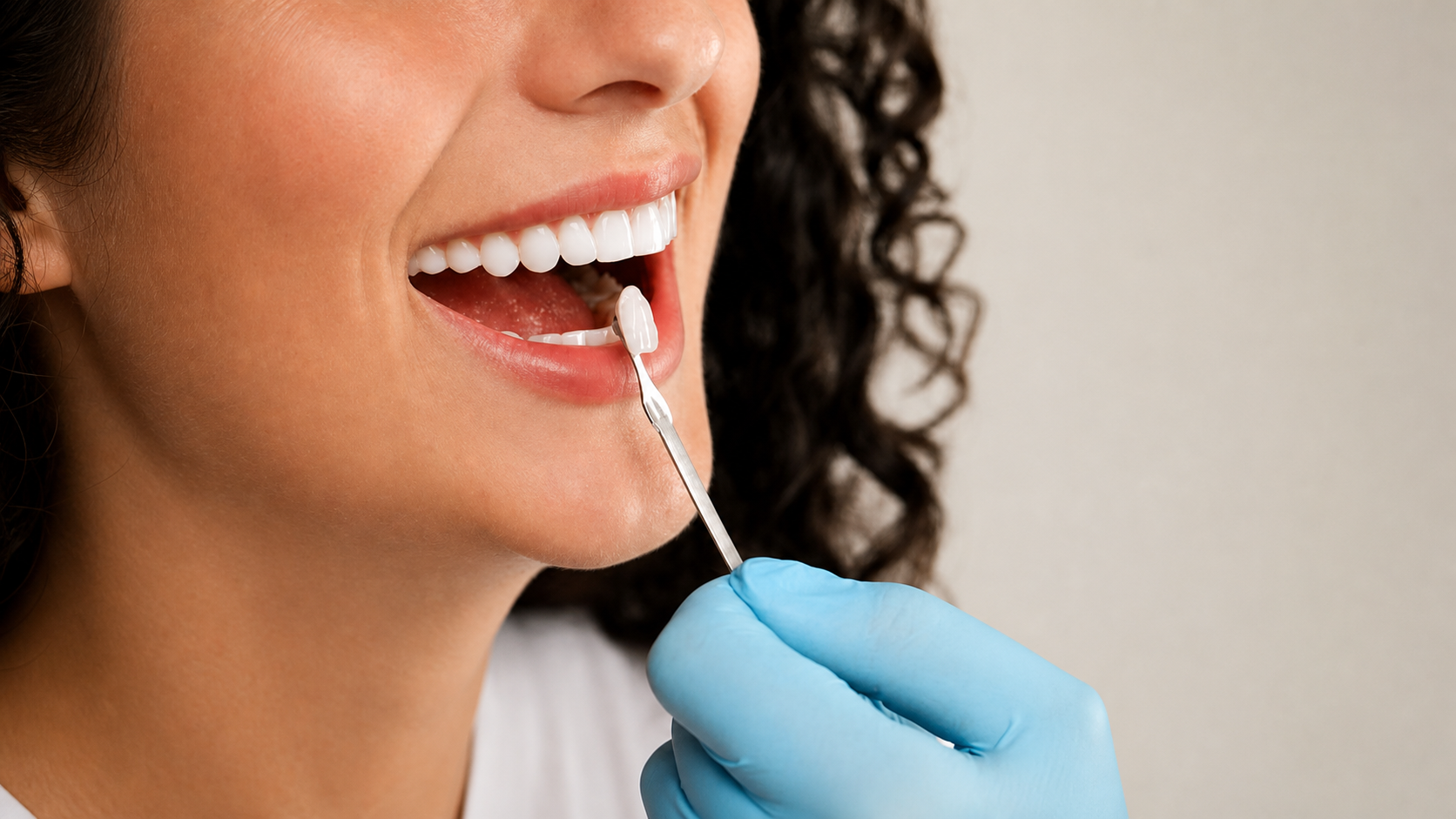
Choosing between composite vs porcelain veneers comes down to your goals, your teeth and how many visits you prefer. Porcelain generally lasts longer and resists stains better, while composite can usually be done in one visit. At Mississauga Smiles Dentistry in Mississauga, both are offered, and a smile assessment helps you choose.
Picking the Right Material for Your Smile
- Both are tooth-coloured. Each can improve stained, chipped, misshapen or slightly uneven teeth
- Porcelain is the long-term option. It generally lasts longer and resists stains better
- Composite is the quicker option. It is usually placed in one visit and can often be repaired in the chair
- Bonding is not the same as a veneer. Bonding fixes small areas; a veneer covers the whole front of the tooth
- The right choice is personal. Your bite, your habits and your goals matter more than any general rule
If you are thinking about veneers in Mississauga, the material is one of the first decisions you will make. Patients often arrive having read that one type is "better", but the right answer depends on what you want to change.
This guide explains how porcelain and composite veneers differ, how veneers compare with bonding, and how to decide which suits your smile.
Composite vs Porcelain Veneers: The Short Answer
When patients compare composite vs porcelain veneers, they are really weighing three things: how long the result lasts, how it looks over time and how much treatment it takes.
- Porcelain usually needs at least two visits, generally lasts longer and resists stains better
- Composite can usually be done in a single visit and is often easier to repair, but stains more easily and generally does not last as long
According to the Canadian Dental Association, both types are thin coverings attached to the front of the teeth, used to improve the look of stained, chipped or misshapen teeth and to cover gaps or slightly crooked teeth. The difference is in the material and the way each one is made.
What Are Porcelain Veneers?
Porcelain veneers are very thin custom shells made of dental ceramic and bonded to the front of the teeth. The CDA explains that for porcelain veneers, the dentist removes a thin layer of enamel, records the shape of your teeth and bonds the custom veneers on a follow-up visit.
At our clinic, intraoral scanners record your teeth for no-mess impressions, and CAD/CAM technology is used for veneer creation. Digital smile design and mockups let you preview the look before treatment begins.
Porcelain is a good match for patients who want:
- A change to several teeth at once, such as a full smile makeover
- A colour that holds up well against coffee, tea and other stains
- The longest-lasting veneer option
What Are Composite Veneers?
So, what are composite veneers? They are veneers made from tooth-coloured resin that is layered, shaped and hardened directly on the tooth. Composite resin veneers are the same thing under a fuller name.
The CDA notes that composite resin veneers can be done in a single visit, using a process similar to bonding. Because the resin is shaped by hand in the chair, small changes can be made on the spot.
Composite is often a good match for patients who want:
- Treatment in fewer visits
- A smaller change to one or a few teeth
- A material that can usually be touched up or repaired in the chair
The trade-off is that composite does not resist stains as well as porcelain and generally needs polishing or repair sooner.
Composite Veneers vs Porcelain Veneers Side by Side
When you line up composite veneers vs porcelain veneers, the differences are easy to see. This table sums them up. For the cost of each, see our guide to how much are veneers, and for lifespan and care, read how long do veneers last.
| Porcelain veneers | Composite veneers | |
|---|---|---|
| Material | Dental ceramic shell | Tooth-coloured resin |
| How they are made | Custom made for each tooth (CAD/CAM at our clinic) | Layered and shaped on the tooth |
| Visits | Usually at least two | Often one |
| Enamel | A thin layer is removed, so it is not reversible | Process is similar to bonding |
| Stain resistance | Higher | Lower |
| If a small chip happens | Often needs a new veneer | Often repairable in the chair |
| Lifespan | Generally longer | Generally shorter |
Bonding vs Veneers: What Is the Difference?
Many people search bonding vs veneers because both use the same kind of tooth-coloured resin. The difference is how much of the tooth is covered.
The CDA explains that bonding is typically used for smaller repairs, while veneers cover the entire front surface of the tooth. Bonding works well for:
- Repairing a small chip or crack
- Closing a small gap between two teeth
- Reshaping one worn or uneven tooth
- Covering a small stain
When people compare composite bonding vs veneers, a simple rule helps: if the concern is small and limited to one area, bonding may be enough. If you want to change the colour, shape or length of whole teeth, a veneer is usually the better fit. Learn more about dental bonding in Mississauga.
Types of Veneers: Which One Suits You?
There are two main types of veneers: porcelain and composite. Here is how patients often decide between them.
Porcelain May Suit You If
- You want to change several teeth, or your whole smile
- Stain resistance and a long-lasting result matter most to you
- Your teeth and gums are healthy and you are ready for a cosmetic upgrade
Composite May Suit You If
- You want a smaller change to one or a few teeth
- You prefer treatment in fewer visits
- You like the idea of touch-ups and repairs being done in the chair
Another Treatment May Come First If
- You have decay or gum disease, which should be treated before cosmetic work
- You grind or clench your teeth; the CDA notes this can damage veneers, so protection such as custom night guards in Mississauga is discussed first
- A large part of the tooth is missing; the CDA notes a crown may be needed instead. See dental crowns in Mississauga
- Your teeth are noticeably crooked, where Invisalign or braces may be the better first step
How We Help You Choose at Mississauga Smiles Dentistry
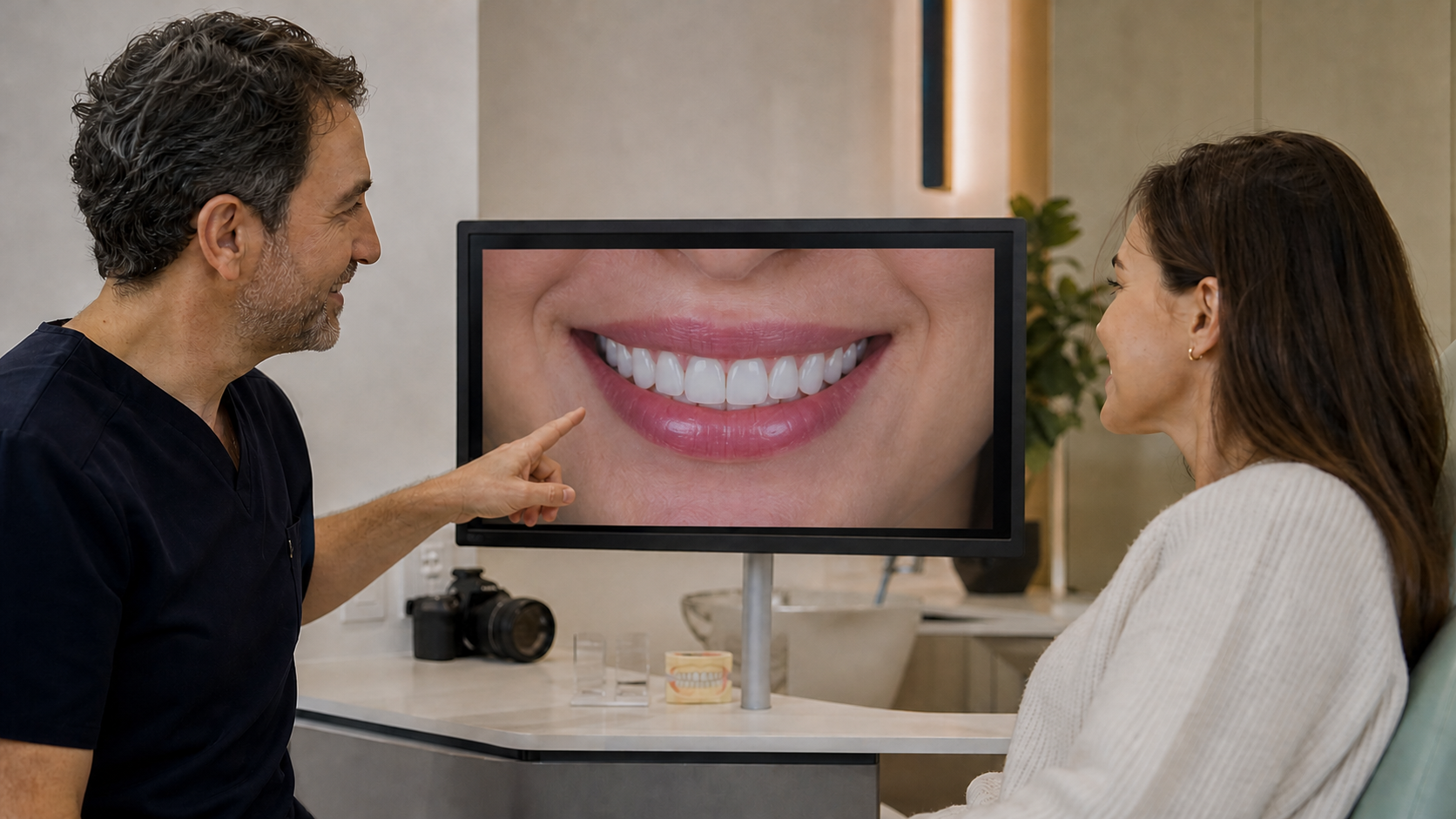
You do not have to decide alone. At our clinic, the choice between porcelain and composite is made together, after a smile assessment.
- Digital smile design and mockups: preview the look of your new smile before treatment
- Before-and-after simulation tools: compare options on screen
- A full smile plan: a smile makeover can combine veneers with whitening, bonding, crowns, gum contouring, or Invisalign or braces
If you are planning a full set of porcelain veneers, whitening is done before placement so the veneers can be matched to your brightest natural shade. Gum reshaping or contouring can also be part of the plan. See our veneers in Mississauga and smile makeovers in Mississauga pages for more about treatment.
What About Cost and Insurance?
Pricing at our clinic is custom and depends on the number of teeth and the type of material. The CDA notes that bonding and veneers are often considered cosmetic and may not be covered by your dental benefits plan.
Financing options are available for smile makeovers, so cost does not have to decide the material on its own. Our guide to how much are veneers explains every factor that shapes the price.
FAQs About Porcelain and Composite Veneers
Is composite bonding the same as composite veneers?
They use the same tooth-coloured resin, but they are not the same treatment. Bonding repairs a small area, such as a chip or a small gap. A composite veneer covers the entire front surface of the tooth to change its colour, shape or size.
Which looks more natural, porcelain or composite veneers?
Both are tooth-coloured and are shaded to blend with your smile. Porcelain resists stains better, so it tends to keep its colour longer. Composite can look very natural too, but it may need polishing over time to stay bright.
Are veneers bad for your teeth?
Veneers are placed on healthy teeth after an exam, and decay or gum problems are treated first. Porcelain veneers are not reversible, because a thin layer of enamel is removed. Daily brushing, flossing and regular checkups keep the teeth under your veneers healthy.
Can I switch from composite to porcelain veneers later?
Often, yes. Your dentist will check the teeth underneath and explain what the change would involve for your smile, since porcelain veneers need a thin layer of enamel removed and that step is not reversible.
Can veneers fix crooked teeth?
Veneers can cover gaps and make slightly crooked teeth look straighter. For teeth that are noticeably crooked, Invisalign or braces may be a better option, either on their own or before veneers as part of a smile makeover.
Still Deciding Between Porcelain and Composite?
Not sure which material fits your teeth, your habits and your goals? A smile assessment gives you a clear recommendation for your own smile.
- A complimentary smile assessment: your teeth, goals and options are reviewed before any decision
- Both materials offered: porcelain and composite veneers, so the choice is based on your needs
- See it first: digital smile design and mockups show you the result before treatment
Call Mississauga Smiles Dentistry or visit us at 90 Burnhamthorpe Rd W, Suite 102, Mississauga, to book your smile assessment.